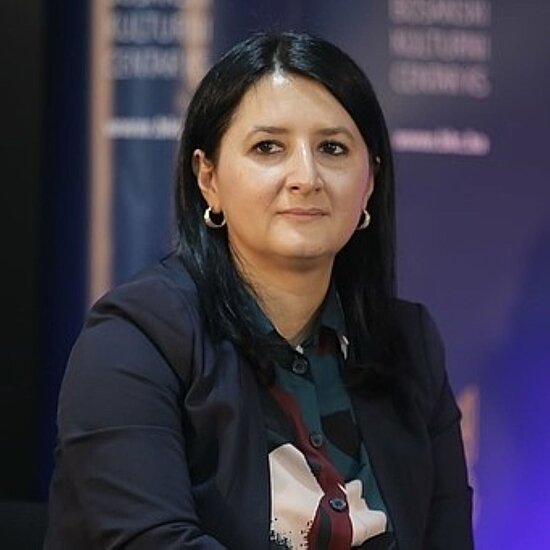
Assist. Prof. Amina Isanović Hadžiomerović
CG1: Promoting Intercultural Dialogue in Adult Learning and Education
Today’s societies are becoming increasingly diverse, but at the same time they are facing fragmentation, polarization and social exclusion. In this context, Adult Learning and Education (ALE) has a responsibility to offer models enabling adults to develop a sense of belonging and engage in meaningful dialogue in order to learn to live together across difference. The Council of Europe’s White Paper on Intercultural Dialogue defines intercultural dialogue as an open and respectful exchange between individuals and groups with different ethnic, cultural, religious and linguistic backgrounds. Furthermore, UNESCO’s flagship report We Need to Talk: Measuring Intercultural Dialogue for Peace and Inclusion underlines the relevance of intercultural dialogue for social cohesion, inclusion and sustainable peace.
The relevance of this topic for comparative analysis in ALE stems from the fact that different national and socio-political contexts provide different frameworks for intercultural dialogue. Cultural identities are not fixed, they are multilayered and continuously shaped through social interaction, historical experience, migration processes, power relations and everyday encounters. This requires nuanced approaches adjusted to diverse settings, rather than one universal model of intercultural education. Within ALE, intercultural dialogue can help adults critically reflect on stereotypes and prejudices, recognize different perspectives and build trust across social and cultural boundaries. The expected learning outcomes of this comparative group are: (1) to analyse approaches to intercultural dialogue in ALE in different countries; (2) to understand how these approaches are shaped by the broader socio-cultural and political context of the given country and (3) to compare how intercultural dialogue is integrated in ALE policies, programs and practices in different countries.
-
Isanović Hadžiomerović, A. (2026). Theoretical Frameworks Underpinning Adult Peace Learning and Education: Findings from a Systematic Review. Studies in Adult Education and Learning, 32(1), 19-41. https://doi.org/10.4312/as/25380
▪ Guimarães, P., Isanović Hadžiomerović, A., Richer, M., Vujić, L. (2026). State Responsibility vs. Individual Commitment in Adult Education Policies in Bosnia and Herzegovina, Serbia and Portugal, Andragogical Studies – forthcoming
▪ Isanović Hadžiomerović, A. (2025) From policy to school: embedding career orientation as a cross-curricular area in Bosnia and Herzegovina. Front. Educ. 10:1615031. doi: 10.3389/feduc.2025.1615031
▪ Isanović Hadžiomerović, A. (2025). Samovrednovanje u organizacijama za obrazovanje odraslih [Self-evaluation in adult education organizations]. In S. Kušić, M. Koludrović, T. Žiljak (eds.). Perspektive razvoja obrazovanja odraslih u sljedećem desetljeću. Split: Sveučilište u Splitu, 128-138
▪ Isanović Hadžiomerović, A., Isanović, H., Çapkın, D.F. (2024). Challenging Transformative Learning and Circular Thinking in an Architecture Study Program. In: T. Žiljak, P. Ristord, N. Alfirević, J. Pavičić, J. (eds). Lifelong Learning for Green Skills and Sustainable Development. Palgrave Macmillan, Cham. doi.org/10.1007/978-3-031-66947-7_10
Her interests are in Adult Education Policy, Lifelong Career Learning, Evaluation in Higher Education
Amina Isanović Hadžiomerović is an associate professor at the Faculty of Philosophy in Sarajevo in the field of Adult Education. She also serves as Head of the Lifelong Learning and Continuing Education Centre at the same Faculty. Since 2021, Amina performs the role of the Editor-in-Chief of the Journal of Adult Education (Obrazovanje odraslih) published in Sarajevo. Amina has led the Working Group commissioned to develop the state-wide Strategy for Adult Education in Bosnia and Herzegovina, and she is continuously active as a consultant in ALE curricula development, andragogical training, drafting legislative proposals and the accreditation of ALE institutions and organizations. Since 2024 Amina is a member of the Social Sciences Department of the Academy of Sciences and Arts of Bosnia and Herzegovina (ANUBIH).