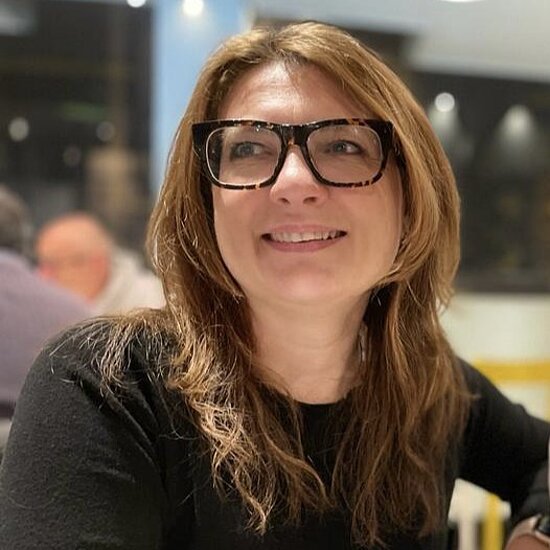
Prof. Elisabetta Ghedin
CG12: Community well-being, adult learning and education, social transformation
In contemporary societies, well-being is no longer understood merely as an individual condition but increasingly as a collective and relational achievement shaped by social bonds, civic participation and shared learning experiences. Adult learning and education (ALE) holds significant – yet underexplored – potential to foster community well-being by strengthening social cohesion, empowering marginalized groups, and supporting the development of what Sen (1999) calls “human capabilities”. While international frameworks such as UNESCO’s Recommendation on Adult Learning and Education (RALE, 2015) and the UN Sustainable Development Goals (SDG 3 and SDG 11) explicitly connect lifelong learning to well-being and sustainable communities, how this connection is translated into policies, programmes, and institutional practices varies considerably across national and regional contexts. Some countries embed well-being explicitly in their adult education frameworks; others address it only implicitly, as a by-product of social inclusion or civic education initiatives. This comparative group invites participants to investigate how adult education contributes to community well-being in their own national contexts, examining both the institutional actors involved and the policy frameworks that shape their action.
Expected learning outcomes:
- Analyse how community well-being is conceptualised in relation to ALE across different national contexts;
- Identify and compare policies, programmes, and practices that explicitly on implicitly address well-being through adult learning;
- Develop comparative analytical skills through transnational dialogue and essay writing;
- Reflect critically on the role of ALE as a driver of social transformation and community flourishing
- Santi M., Ghedin E. (2024). Philosophical inquiry and the childness of communities: Connective capabilities for flourishing education. In: (a cura di): Walker M. A. Boni D.C. Velasco, Reparative Futures and Transformative Learning Spaces. p. 239-261, London:Palgrave, McMillan, ISBN: 9783031458057
- E. Ghedin (2021). Social Innovation through Collaboration for Enabling Educational Inclusive EcoSystems: Following Italy's Lead. In: Semon S.R. Lane D. and Jones P. (Ed.). Instructional Collaboration in International Inclusive Education Contexts. INTERNATIONAL PERSPECTIVES ON INCLUSIVE EDUCATION, vol. 17, p. 71-96, Londra:Emerald Publishing Limited, Bingley, ISBN: 978-1-83982-999-4, ISSN: 1479-3636, doi: 10.1108/S1479-363620210000017008
- Ghedin E., Aquario D. (2020). Collaborative teaching in mainstream schools: Research with general education and support teachers. INTERNATIONAL JOURNAL OF WHOLE SCHOOLING, vol. 16, p. 1-34, ISSN: 1710-2146
- Disability and lifelong education
- Educational well being and life design
- Social inclusion / exclusion and flourishing life design
- Independent Living Projects
- Connective capabilities and sustainable and accessible ecosystems
Prof. Elisabetta Ghedin Ph.D. is Associate Professor in Inclusive education at the dept. FISPPA (Philosophy, Sociology, Pedagogy and Applied Psychology), University of Padova. Since 2022 she is Master’s Degree Coordinator of Management of Educational Services, Adult and Continuing Education and since 2025, Director of the Postgraduate Specialisation Programme in Educational Support for Students with Disabilities". She is also the Coordinator of the curriculum RIWSE “Research on Inclusion, Well-being, and Sustainability in Education”, PhD. Course on Pedagogical, Educational and Training Sciences – SPEF, University of Padova.