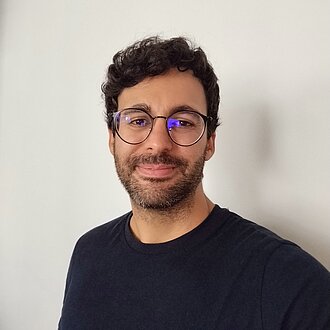
Prof. Lucas Pacheco Campos
What excites you about adult learning and education?
As social beings, we are always learnng in order to adapt and improbe ourselves to answer to our realnecessities and to deal with the possibilities that appear during our lives. At the same time as we learn and act, we are also teaching among other socal beings, on purpose or not. Therefore, learning and teaching are permanent and social actions. As Paulo Freire would say, "nobody teaches anybody, nobody educates itself, human beings educate among themelves, mediated by the world". In freirian perspective, thats a good starting point to think about permanent education or lifelong learning. Considering this idea, I would lie to reflect and debate about the multiple (maybe infinite) ways we organize and promote educational processes - formal, informal, non-formal"
Lucas Pacheco Campos, Fluminense Federal University, Brazil
Lucas Campos has been a Public Administrator Specializing in Education at Fluminense Federal University (Brazil) since 2023 and served as an Assistant Professor at the Federal University of Juiz de Fora (Brazil) from 2018 to 2023. He holds a PhD in Public Policies and Human Development from Rio de Janeiro State University (Brazil), completed in partnership with the Institute of Education at the University of Lisbon (Portugal).
His main research interests are linked with politics, public administration and organizational studies. In this field, he has been reflecting on the relationships between the State, civil society and educational public policies.
CG6: Adult Education and Learning systems in national contexts
Co-Moderator: Prof. Paula Guimaraes & Marco Paz
Adult education and learning systems are increasingly central to comparative education because they reveal how different societies respond to policy problems when considering national, regi-onal and local matters to be considered in policy. The existing systems intend to present, orga-nize and give coherence to possible education pathways (offers) that might offer solutions to adult learners. In general, adult education and learning systems are stressed in policy discours-es, specifically that adult education and learning can occur life long and life wide. Unlike school based systems geared to children and youth, adult learning encompasses a highly diver-se mix of formal and non formal pathways, within diverse offers such as the ones within the following poles:
a) literacy and second-chance education,
b) vocational education and training as well as workplace learning, as well as
c) community, popular and education referring to local issues, and
d) political and civic programme (or liberal adult education as named in several countries) within formal and non-formal education.
Adult education and learning systems may vary according to supranational and international organizations, policy priorities and aims es-tablished in legal frameworks, programes and policy strategies, as well as funding in what re-fers to main sources. These characteristics have an impact on offers proposed to adult learners, such as adult learners themselves and participation patterns across countries, as well as adult educators (from initial education through continuing education and learning in workplace). A comparative lens makes it possible to identify both structural and contextual similarities and differences (e.g., from democratic emancipatory to modernization and state control to human resources management trends) as well as divergent and convergent trends, such as the rise of lifelong learning discourses vs lifelong education/humanistic approaches, and policies and strategies such as programs promoted by supranational organizations or national Governments. These trends have an impact on participation patterns in lifelong learning. They also impact on adult educators preparation (initial and continuing education).
Within this frame, when considering historical trajectories of the different countries, critical junctures – moments of significant change -, institutional key actors and institutional configura-tions can allow the problematization of changes occurred in recent decades.
ALVES, Natália, SCHMIDT-LAUFF, Sabine, DOUTOR, Catarina & CAMPOS, Lucas (2020). Contexts of Recognition of Prior Learning: a comparative study of RPL initiatives in Brazil, Portugal and Germany. Andragogical Studies, 2, 87-110.
CAMPOS, Lucas & NEPOMUCENO, Vera (2020). Reflexões sobre a (re)configuração do trabalho docente no Brasil e em Portugal na era neoliberal. In: CABRERA (Org.). História do Movimento Operário e Conflitos Sociais em Portugal. 687-702. Lisboa: Instituto de História Contemporânea.
CAMPOS, Lucas (2018). Políticas Públicas e as lutas por memória e justiça: contradições e limites. Revista Transversos, 12, 37-55.
CAMPOS, Lucas (2017). A construção da cidade olímpica carioca: o que ficará na memória? In: CALABRE, CABRAL & SIQUEIRA (Orgs.). Memória das olimpíadas no Brasil: diálogos e olhares. 2, 152-167. Rio de Janeiro: Fundação Casa de Rui Barbosa.
CAMPOS, Lucas, SANTOS, Laura & PRESTES, Gabriela (2015). A Administração Pública e o Projeto de Educação Brasileiro: o caso da cidade do Rio de Janeiro. Revista Brasileira de Administração Política, 8, 141-160.