Adult Education Academy 2026
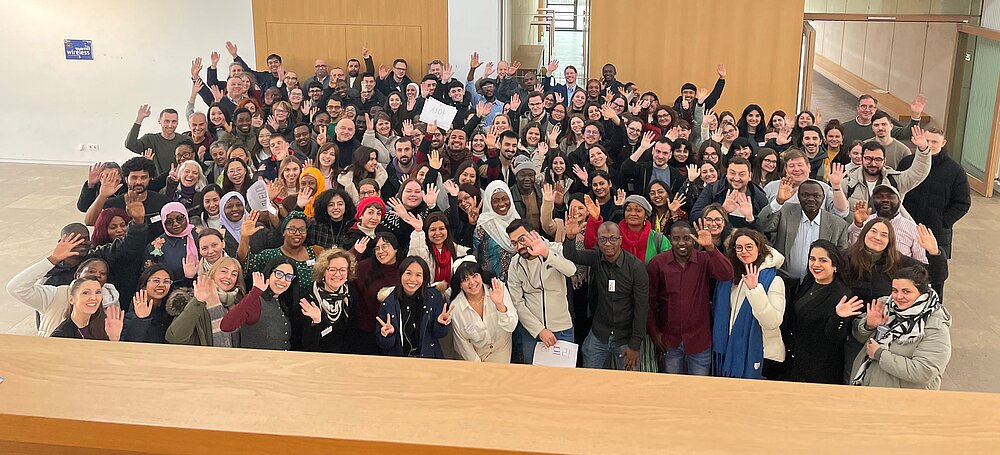
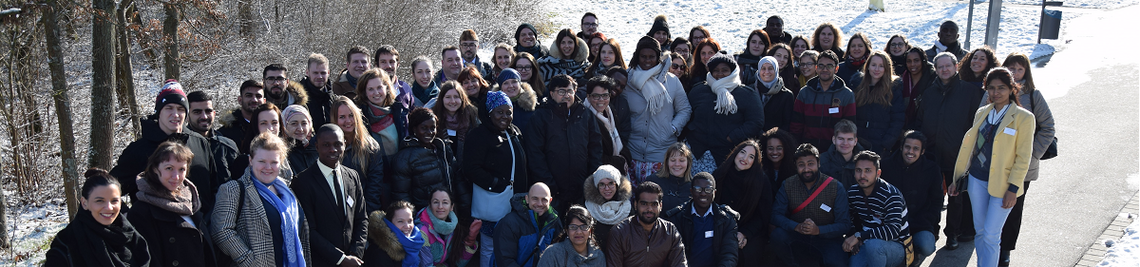
The Adult Education Academy 2026 brought together a diverse international group of nearly 160 participants, including master’s and doctoral students, practitioners, and moderators, to explore contemporary challenges and innovations in adult education and lifelong learning. Most participants attended the Academy on-site in Würzburg, which fostered direct collaboration, networking, and hands-on engagement. A few participants had the option to join the first week online, ensuring participation despite geographical or scheduling constraints.
Over the course of two weeks, participants engaged in discussions, collaborative research, and comparative analyses that bridged theory and practice. Participants gained a deeper understanding of international policies, educational structures, and practical approaches while strengthening their critical thinking, teamwork, and intercultural communication skills.
This year’s Academy created a very vibrant environment for knowledge exchange, reflection, and professional networking. The Academy encouraged participants to actively connect theoretical frameworks with practical insights, preparing them to navigate and contribute to the evolving field of adult education worldwide.
Connecting theory and practice
During the first week of the AEA, participants discussed two major topics. As in previous years, master’s students and practitioners focused on international strategies in adult education and lifelong learning, while PhD students examined Paulo Freire’s theory for international adult education.
Due to the large number of participants this year, four groups were formed to work on the first topic. Professor Egetenmeyer, head of the Professorship for Adult and Continuing Education at the University of Würzburg, and Dr. Jörg Schwarz, a lecturer at the same Professorship, moderated sessions on adult education providers in Germany. Professor Tadej Košmerl of the University of Ljubljana in Slovenia led sessions on social policy models. Professor Nélia Vicente of the University of Lisbon in Portugal worked with participants on different levels of analysis. Another contribution was made by Professor Alan Tuckett, a DAAD guest professor at the University of Würzburg, by holding sessions on the topic of Confintea, the UN system and adult learning. Professor Natália Alves and Professor Paula Guimarães, both from the University of Lisbon in Portugal, led some of the previously mentioned sessions and prepared the participants for the upcoming local, regional, and international field visits taking place on days three to five of the programme.
Professor Licínio Lima, Professor em. at the University of Minho in Portugal, guided the discussions of the PhD group, which focused particularly on the work of Paulo Freire, by providing intensive literature studies that connected theory and practice.
Field visits and practical engagements complemented the theoretical sessions. Participants had the opportunity to observe adult education practices of different providers in Würzburg (VHS, IHK, Robert-Kümmert-Academy, Kolping-Academy, and Jugendbildungsstätte Unterfranken), Frankfurt (VHS, DB, and Walter-Kolb-Stiftung) and Bamberg (Federal Police Training and Education Centre). Through these observations, participants gained insights into organisational structures, programme delivery, and local/regional learning initiatives. Hybrid formats were used for the selected online participants to ensure active participation and interaction during the field visits.
Representatives from internationally operating adult education organisations (DVV International, EAEA, ICAE, and UIL) also contributed by sharing perspectives on global policies, networks, and innovations in lifelong learning. These sessions allowed participants to contextualise their learning and compare international approaches, fostering a broader understanding of the field.
Comparative group work: an international comparison of adult education structures
During the second week, participants worked in thirteen comparative groups to explore various aspects of adult education and lifelong learning among the participants’ home countries. Each group focused on a specific topic, chosen according to the participants’ research interests and professional experiences. Through collaborative group discussions, analyses, and presentations, participants examined similarities and differences at different structural and analytical levels related to the topic and the respective home countries, reflecting on emerging trends and challenges in the field of adult education.
On the final day, all groups presented their findings using posters, digital formats, and innovative, interactive presentation styles. These presentations showcased the groups’ in-depth comparative analyses and provided an opportunity to discuss the results with other peers and moderators, highlighting the valuable insights gained through international exchange.
The two-week programme concluded with a celebration at the Neubaukirche recognising the participants’ achievements and contributions, as well as their analytical work, teamwork, and engagement. The graduation ceremony for the second cohort of Double Degree master’s students also took place at this event.
Once again, the Adult Education Academy provided a unique space for connecting theory and practice, fostering professional networks, and reflecting on global developments in adult education and lifelong learning.